
DFG funds new collaborative research centre on “Functional Papers”
Paper is a sustainable material with distinctive properties and a wide range of applications. It is made from natural raw materials such as wood and cotton, is biodegradable and has a recycling rate of around 80 per cent in Germany. Its fibrous structure gives paper distinctive mechanical properties. In addition, its porous structure allows liquids to move through it without the need for pumps. This principle is used, for example, in blotting paper and medical diagnostic tests.
However, the relationships between the chemical composition of paper, its fibrous structure and its resulting properties are not yet fully understood. A new Collaborative Research Centre (CRC) funded by the German Research Foundation (DFG), entitled “Functional Papers”, aims to address this gap. Led by TU Darmstadt, researchers from TU Darmstadt, the University of Freiburg and other partners are jointly investigating the fundamental properties of paper and developing new approaches to functional paper materials.
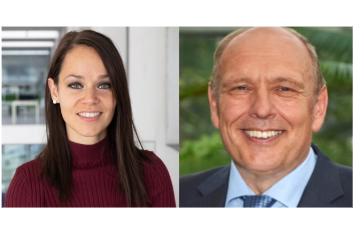
At the Faculty of Engineering at University of Freiburg, the research group led by Prof. Dr. Jürgen Rühe is involved in two projects. A third project is being carried out by the junior research group led by Dr. Céline Calvino. Together, the three projects explore different ways of modifying and investigating the properties of paper.
Wet strength: keeping paper strong when wet and recyclable
Paper often needs to retain its strength when exposed to water. This is important for products such as tissues, kitchen paper, packaging, banknote paper and materials used in medical diagnostics and treatment. Conventional paper, however, loses much of its strength when wet, retaining only a small fraction of its original dry strength.
Special wet-strength additives can help prevent this loss of strength. However, some of these substances raise environmental concerns and can make it more difficult to break paper down into fibres for recycling. The project led by Prof. Dr. Jürgen Rühe and Prof. Dr. Markus Biesalski is therefore investigating a new chemical approach to wet strength. The aim is to develop paper that remains strong even when wet while still being suitable for recycling.
Stretchable paper through hinge-like structures in fibres
Conventional paper can generally be stretched by less than 0.2 per cent before it tears. Although processes such as creping or crinkling can make paper appear more flexible, they mainly work by unfolding folds already present in the material rather than by changing the paper’s intrinsic mechanical properties.
In this project led by Prof. Dr. Jürgen Rühe and Prof. Dr. Samuel Schabel, researchers are developing a different approach. They aim to equip paper fibres with flexible, hinge-like structures. These would allow the fibres to move relative to one another when the paper is stretched and return to their original positions once the load is released. The goal is to give paper greater stretchability without relying solely on folds or wrinkles in the material.
Paper that makes mechanical stress visible
A further subproject led by Dr. Céline Calvino focuses on the development of mechanochromic papers. These materials are designed to change their optical properties in response to mechanical stress, allowing mechanical responses within paper structures to be visualized. To achieve this, the researchers are investigating how forces are transferred within cellulose fibres and paper structures.
As part of the project, they are developing force-responsive molecular motifs that can be incorporated into cellulose fibre networks. By investigating their response to mechanical deformation, the research aims to gain a fundamental understanding of how stresses are distributed and transferred within paper structures. In the future, such “self-indicating” papers could help improve the reliability, durability and safety of paper-based products, while opening up new possibilities for investigating complex fibre networks.
The Collaborative Research Centre “Functional Papers” aims to deepen our understanding of the relationships between the chemical composition, structure and properties of paper, and to develop new functional paper materials. The research will contribute to the further development of this sustainable material and lay the foundations for new high-tech applications based on paper.
Contact:
Kerstin Steiger-Merx
Representative Marketing & PR
Faculty of Engineering
University of Freiburg
Tel.: +49 761 203-8056
Email: steiger-merx@tf.uni-freiburg.de
Dr. Céline Calvino
University of Freiburg
Cluster of Excellence livMatS
FIT – Freiburg Center for Interactive Materials and Bioinspired Technologies
Email: celine.calvino@livmats.uni-freiburg.de
Prof. Dr. Jürgen Rühe
Professor of Chemistry and Physics of Interfaces
Department of Microsystems Engineering (IMTEK)
University of Freiburg
Speaker of the livMatS Cluster of Excellence
Tel.: +49 761 203-7161
Email: ruehe@imtek.uni-freiburg.de